In the summer of 2004, during what scholars now commonly refer to as Iran’s “sexual revolution,” groups of Iranian women began showing up in public wearing red nail polish and open-toed shoes.
They did so despite threats from the country’s morality police to force their hands or feet into containers filled with cockroaches.
Pardis Mahdavi — an Iranian-American scholar, former dean at Arizona State University, and an author whose 2008 book Passionate Uprisings: Iran’s Sexual Revolution drew from years of fieldwork and interviews she conducted inside Iran between 2000 and 2007 — recalled the strategy behind the coordinated act of defiance simply:
“There weren’t enough cockroaches in all of Iran.”
If enough women did it all at once, the state could not punish everyone.
Mahdavi has spent more than two decades studying youth culture and resistance movements in Iran, particularly among women and young adults navigating life under the country’s theocratic regime.
“The people are not the regime,” Mahdavi said.
To Mahdavi, Americans often misunderstand Iranian resistance movements.
While Western coverage often frames the country primarily through geopolitics or religious extremism, Mahdavi says generations of Iranians have been pushing against state control in daily life through art, underground music scenes, coded fashion, dance gatherings, writing, and public acts of solidarity.
Over time, even small visual choices became politically charged.
“They made our bodies the battleground,” she said, describing how young women slowly pushed back against state control through clothing, makeup, and hairstyles.
Mahdavi described women gradually moving headscarves farther back and wearing red lipstick or nail polish, despite the risk of arrest.
What might appear to Americans as fashion or youth culture often carried deeper meaning inside Iran’s political climate.
“The body itself became a political site,” she said.
Much of Mahdavi’s work focuses on the generations that came of age after the Iranian Revolution — highly educated young people facing unemployment, censorship, and strict moral regulation. Rather than disengaging, many transformed music, film, poetry, parties, and visual identity into forms of resistance.
The tensions Mahdavi described did not end with the early-2000s movement she documented in Passionate Uprisings.
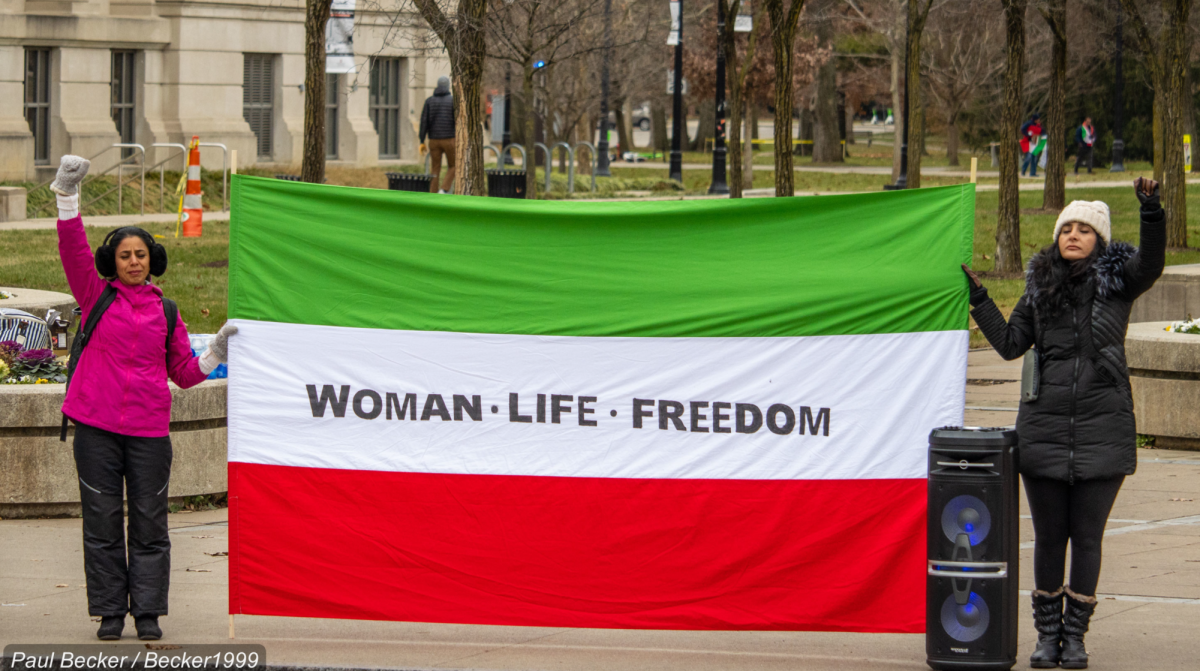
During the 2022 Women, Life, Freedom protests sparked by the death of 22-year-old Mahsa Amini while in morality-police custody, hair, clothing, bodily autonomy, and public visibility again became central symbols of resistance in Iran.
In a 2025 report, Human Rights Watch noted that many Iranian women said they would continue demanding rights and justice “despite the risks and personal costs and in the face of longstanding repression and abuse.”
For Mahdavi, one of the most important lessons from Iran’s resistance movements is that courage spreads collectively and intergenerationally.
“If these people didn’t just roll over and say, ‘Okay,’ then we’re not going to either,” she said, describing how younger generations drew strength from those who resisted before them despite arrests, exile, and violence.
Earlier this year, speaking at a CreativeMornings Phoenix event, Mahdavi described “mothers, daughters, and grandmothers all resisting together” during Iran’s protest movements.
While Mahdavi’s research centers on Iran, she believes the broader dynamics of creative resistance resonate globally. She pointed to movements across multiple countries where ordinary people use visibility, public space, art, collective action, and cultural expression to challenge systems of power.
“I think these movements build on each other,” she said. “When people see others going out and speaking out against authoritarianism and injustice, it inspires them to think, ‘Hey, I could do that too.’”
That idea increasingly resonates in the United States, where debates around protest, public surveillance, bodily autonomy, censorship, and identity have become central features of American public life.